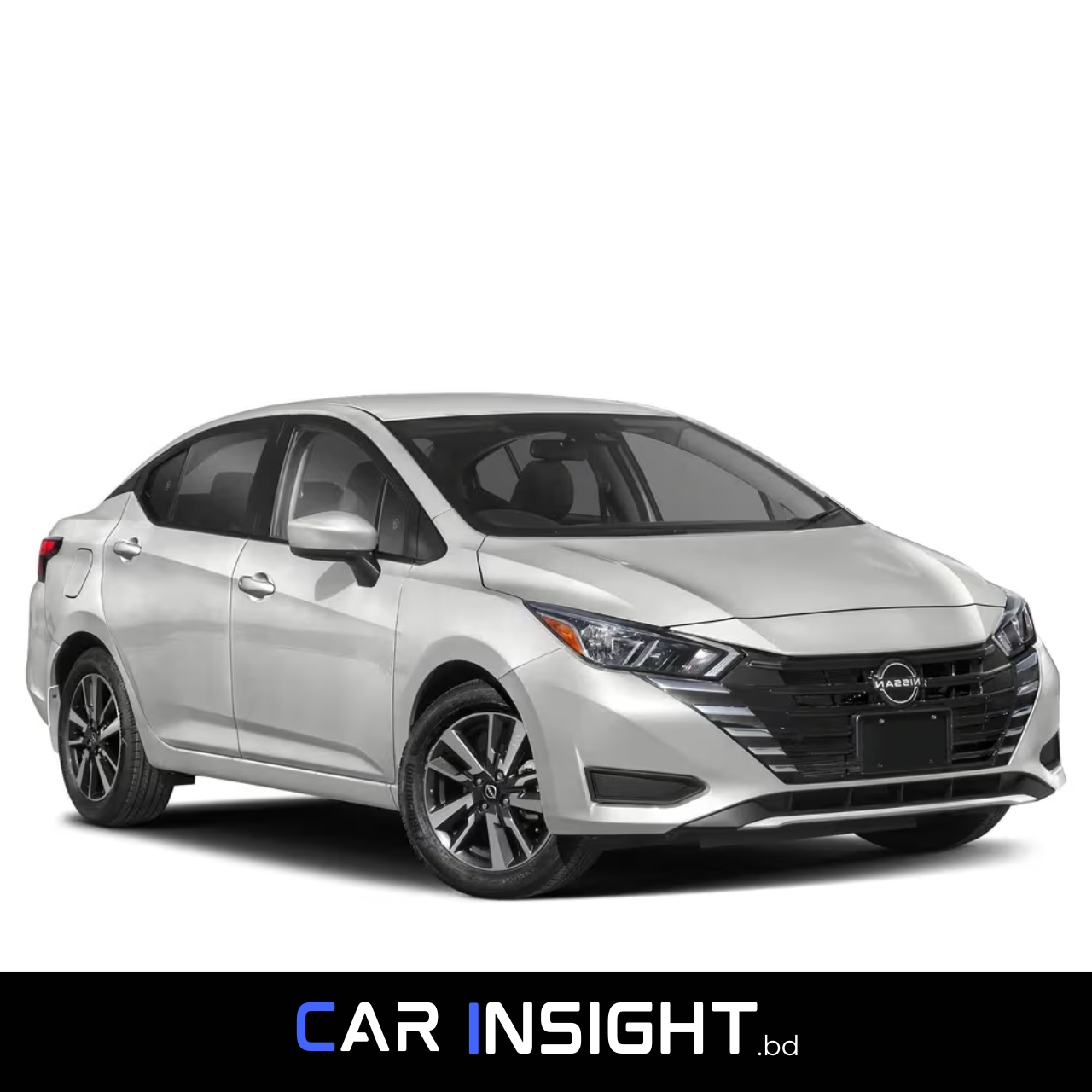
If you’re scrolling through Bikroy or Garirbazar at 11 PM trying to find a reliable ৳8–12 lakh sedan that won’t drown you in fuel costs during Dhaka’s gridlock on Mirpur Road, the Nissan Sunny has probably shown up more than once. It’s one of the most listed used sedans in Bangladesh, and for good reason — light steering, cheap parts, and an engine that shrugs off potholes on the way to Uttara. This guide breaks down the actual Nissan Sunny price in Bangladesh by year and condition, real mileage numbers from BD owners, maintenance costs, and whether it still makes sense to buy one in 2026.
Quick Overview — Is Nissan Sunny Worth Buying in Bangladesh?
The Nissan Sunny in Bangladesh is a used/reconditioned Japanese import, not a car sold new by any authorized dealer — production of the model ended over a decade ago, so every unit on the road here is a B15 or N16 generation import, typically registered between 2001 and 2014. Prices run from around ৳6.5 lakh for an early-2000s unit with high mileage to ৳15–16 lakh for a later, well-kept Japanese-spec model with lower odometer readings and updated interiors. It’s best suited to first-time buyers, small families, and ride-share drivers who want low running costs over comfort or status. Its biggest advantage is genuinely cheap ownership: light 1.3-litre engine, easy CNG conversion, and parts available in almost every mechanic’s shop from Jatrabari to Chittagong. Its biggest disadvantage is age — you’re buying a 12- to 25-year-old car, so an auction sheet check and a trusted mechanic’s inspection are non-negotiable before you hand over any money.
Nissan Sunny Price in Bangladesh 2026
Because the Sunny isn’t imported new, there’s no fixed “showroom price” — the market is entirely secondhand and reconditioned, and price depends heavily on registration year, engine condition, and whether the unit is a fresh reconditioned import or an already-registered used car being resold locally.
| Category |
Model Years |
Typical Price Range (BDT) |
| Early registered/used |
2001–2006 |
৳6.5 – 8.5 lakh |
| Mid-age used, good condition |
2007–2009 |
৳8.2 – 10.5 lakh |
| Later reconditioned imports |
2010–2014 |
৳10.5 – 16 lakh |
| On-road price (with registration, tax token, insurance) |
Any year |
Add roughly ৳50,000 – 80,000 to the purchase price |
Regional variation: Dhaka listings tend to sit slightly higher than Chittagong or provincial-city listings for the same model year and mileage, mainly because of demand density and dealer overhead in areas like Mirpur, Mohammadpur, and Uttara. Buyers who source from Chittagong port-adjacent dealers (Agrabad, Access Road) sometimes get a slightly better deal on freshly landed reconditioned units before they’re moved to Dhaka showrooms.
Import duty impact: Bangladesh allows reconditioned vehicle imports up to five years old, and duty is calculated on a depreciated CIF value rather than the full new-car value. Because the Sunny’s engine sits under the 1500cc bracket, it falls into a comparatively lower total-tax slab than mid-size sedans over 1500cc — engine capacity is the single biggest driver of how much duty and supplementary tax gets added on top of the Japan auction price. This is one reason the Sunny has historically undercut same-size Toyota and Honda rivals at the point of import, even though that price gap narrows once you’re comparing two already-registered used cars on the local resale market.
Full Specifications
| Spec |
Detail |
| Engine |
QG13DE, 1.3L inline-4, DOHC 16-valve (1.5L QG15/HR15 variants also found on some units) |
| Displacement |
1,295cc (1.3L) |
| Power |
87–90 PS @ 6,000 rpm |
| Torque |
113–120 Nm @ 4,400 rpm |
| Transmission |
4-speed automatic or 5-speed manual |
| Fuel type |
Petrol (Octane), widely converted to Octane+CNG or Octane+LPG |
| Mileage (city) |
10–14 km/l on Octane in Dhaka traffic |
| Mileage (highway) |
16–18 km/l on Octane |
| Mileage (CNG, mixed) |
12–16 km/kg |
| Seating |
5 |
| Boot space |
Approx. 400–430 litres |
| Ground clearance |
Approx. 160–165mm |
| Safety features |
Dual airbags (on most later units), ABS, disc brakes (front), central locking |
Specs vary between the B15 (2001–2006 shape common in early BD imports) and the N16/B15-facelift units (2007–2014), so always confirm the exact chassis and engine code on the vehicle’s Japanese export certificate before buying.
Detailed Review — How Does It Drive in Bangladesh?
In Dhaka’s stop-start traffic — think Mohakhali flyover at 5 PM or the Mirpur-10 signal on a Sunday evening — the Sunny’s 1.3-litre engine and light unassisted-feeling power steering make it one of the easier cars to live with. It doesn’t have the torque to feel quick, but it also doesn’t strain the way heavier 1.5–1.6L sedans do when crawling in first gear for twenty minutes straight. Clutch and steering effort (on manual units) stays low, which matters if you’re doing this commute daily.
On the Dhaka–Chittagong highway or the Dhaka–Mymensingh route, the Sunny holds a steady 90–100 km/h without excessive strain, though overtaking slower trucks needs planning — this is not a car that rewards last-second lane changes at highway speed. The suspension, tuned originally for smoother Japanese roads, transmits more road texture than a locally-tuned car would over Bangladesh’s uneven patches, but it copes reasonably with the speed bumps that appear every few hundred metres on secondary roads near Savar or Ashulia. Owners consistently report the ride as “firm but not harsh” rather than plush.
Fuel efficiency is where the Sunny earns its reputation. Multiple BD owner listings and forum reports put real-world mileage between 10–14 km/l on pure Octane in city driving, climbing to 16–18 km/l on the highway — figures that hold up better than many rivals in the same price bracket once you account for Dhaka’s actual traffic density rather than manufacturer-quoted combined-cycle numbers. A large share of Sunny owners in Bangladesh run a dual-fuel Octane+CNG or Octane+LPG conversion, which is common, well-supported by local garages, and drops running costs further, though it does slightly reduce peak power.
AC performance is a genuine strength that keeps coming up in owner listings — several sellers specifically advertise “ice-cool AC” or “super cool AC” as a selling point, which tells you it’s a car that’s proven itself against Bangladesh’s humid pre-monsoon heat. That said, on a car this old, AC compressor and condenser condition varies enormously between individual units, so test it thoroughly — ideally on a hot afternoon, not during a cool morning test drive — before finalising any purchase.
Features Breakdown
Exterior design: A conservative, three-box saloon silhouette typical of early-2000s Nissan design language — halogen headlamps, modest chrome trim, and 14–15 inch wheels (some resold units are upgraded to 15-inch alloys locally).
Interior quality: Fabric or beige leatherette seats depending on trim and import batch, simple analog gauge cluster, and manual or basic auto climate control. Later units (2010–2014) get marginally better fit-and-finish and sometimes a factory CD/audio head unit, though most cars on the BD market today have had their infotainment swapped for aftermarket Android head units with reverse cameras — a very common local upgrade you’ll see listed as a selling point.
Infotainment: Nothing factory-standard worth relying on at this age. Budget an extra ৳8,000–20,000 if the unit you’re buying hasn’t already been fitted with an aftermarket touchscreen and back-up camera, which the majority of listings in Dhaka already include.
Safety: Dual front airbags and ABS appear on most 2007-onward units, though earlier 2001–2006 imports may have only a driver airbag or none at all — this is a critical checkpoint, not an assumption, so verify airbag count on the specific unit rather than relying on the model generation alone. There’s no meaningful NCAP crash-test data specific to the BD-market Sunny generations, since these were never crash-tested under a program relevant to import-market vehicles.
Comfort: Manual AC controls, cloth or leatherette seating, and decent rear legroom for the car’s compact footprint — reasonable for a family of four on city trips, tighter for four adults on a long highway run.
Bangladesh-spec note: Because every unit is either reconditioned-imported or already locally registered, there’s no single “global spec” to compare against — feature levels depend entirely on the trim and year of the individual Japanese donor market unit, so two Sunnys of the same registration year can have noticeably different equipment.
Fuel Economy — Real-World Numbers in Bangladesh
| Condition |
Nissan Sunny (Octane) |
Nissan Sunny (CNG) |
Toyota Axio (for comparison) |
| City (Dhaka traffic) |
10–14 km/l |
12–14 km/kg |
12–15 km/l |
| Highway |
16–18 km/l |
14–16 km/kg |
18–22 km/l |
| Mixed |
12–15 km/l |
13–15 km/kg |
14–18 km/l |
The Sunny’s smaller 1.3L engine gives it an edge over larger 1.5L rivals in stop-start city driving, though newer hybrid-assisted competitors like the Axio (hybrid variant) or Honda Grace pull ahead on the highway thanks to electric-assist cruising. CNG conversion note: a large share of the Sunny fleet in Bangladesh already runs dual-fuel. If you’re buying a unit that isn’t converted, a 60-litre CNG cylinder conversion typically costs a few thousand taka more than for larger-engine cars and pays itself back quickly at current CNG pricing versus Octane.
Maintenance Cost in Bangladesh
This is genuinely where the Sunny separates itself from newer, feature-heavy rivals, and it’s the section most competing articles skip entirely.
- Routine servicing: Basic oil change, filter, and check-up typically runs ৳2,500–4,000 per visit at a local garage (not an authorized Nissan service centre, since none of these units are under any factory warranty).
- Annual estimated cost: Owners commonly report ৳15,000–25,000 a year in combined servicing, minor parts, and consumables for a well-maintained unit driven moderately — noticeably lower than a same-era Toyota Axio or Honda Grace, largely because the Sunny’s mechanicals are simpler and its parts are cheaper.
- Spare parts availability: Excellent for wear items — filters, brake pads, suspension bushes, belts — which are stocked by local parts shops in Dhaka’s Bangshal and Nababpur markets. Electronic components and body panels for the exact trim can require a wait for import if the specific part isn’t locally stocked.
- Common issues reported by BD owners: Age-related wear on suspension bushings and shock absorbers by the time a unit crosses 100,000–150,000 km on the odometer, AC compressor wear if service history is unclear, and — as with any 15–20-year-old reconditioned car — the risk of undisclosed prior accident repair if the auction sheet isn’t verified before purchase. None of these are unique to the Sunny; they’re the standard checklist for any aging Japanese import in this price band.
Who Should Buy the Nissan Sunny?
Family buyers on a tight budget: If your priority is a dependable school-run and market-run car under ৳10 lakh rather than highway comfort, the Sunny fits well, particularly a 2007–2010 unit with verified low mileage.
First-time buyers: Light controls, forgiving parts costs, and a huge secondhand parts ecosystem make it a low-risk car to learn on — mistakes cost less to fix than they would on a pricier rival.
Ride-share and corporate-use drivers: The fuel economy and CNG-friendliness make it a sensible daily-mileage vehicle for anyone clocking 100+ km a day around Dhaka, where running cost matters more than cabin refinement.
Not recommended for: Buyers who primarily do long highway trips at higher speeds, want factory safety tech (blind-spot monitoring, multiple airbags as standard), or need strong resale liquidity — the Sunny’s resale demand has softened compared to the still-dominant Toyota Axio and Honda Grace in the same used-sedan segment.
Nissan Sunny vs Competitors — Quick Comparison
| Model |
Price (BDT) |
Engine |
Mileage (mixed) |
Boot Space |
Verdict |
| Nissan Sunny |
৳6.5 – 16 lakh |
1.3L, 87–90 PS |
12–15 km/l |
~400–430L |
Cheapest to buy and run; best for tight budgets |
| Toyota Axio |
৳18 – 32 lakh (reconditioned) |
1.5L, 109 HP (or hybrid) |
14–18 km/l |
~470L |
Higher upfront cost but stronger resale and part supply |
| Honda Grace |
৳20 – 22 lakh+ (reconditioned) |
1.5L hybrid, 135 HP |
18–22 km/l |
~430–450L |
More power and features, but higher purchase and repair cost |
At roughly half the price of an Axio or Grace, the Sunny trades resale value and modern refinement for a much lower entry cost and cheaper running costs — a reasonable trade for buyers whose main goal is minimizing total cost of ownership rather than maximizing resale later.
Frequently Asked Questions
Is Nissan Sunny good for Dhaka traffic?
Yes. Its 1.3L engine and light steering make it comfortable in stop-start conditions, and its city mileage (10–14 km/l on Octane, better on CNG) is competitive with much newer cars in the same price bracket.
What is the maintenance cost of Nissan Sunny in Bangladesh?
Expect roughly ৳15,000–25,000 per year for routine servicing and minor parts on a well-kept unit — lower than most same-era Toyota or Honda rivals because parts are cheap and widely stocked locally.
How much import duty applies to a reconditioned Nissan Sunny?
Since it’s under 1500cc, it falls into a lower total-tax bracket than bigger sedans, though exact duty depends on the assessed CIF value, the unit’s age-based depreciation allowance, and current NBR rates, which change with each budget cycle — always confirm current rates with your importer.
What is the Nissan Sunny’s real mileage in Bangladesh?
Real-world reports put it at 10–14 km/l in Dhaka city traffic and 16–18 km/l on the highway when running on Octane, with slightly better economy on CNG conversion.
Is Nissan Sunny reconditioned price in Bangladesh negotiable?
Yes, almost all listings are negotiable, and price depends heavily on documented service history, mileage, and whether an auction sheet is available to verify the car hasn’t had major accident repair.
Conclusion
The Nissan Sunny remains one of Bangladesh’s cheapest routes into reliable Japanese car ownership, with strong fuel economy and low running costs offsetting its age and softer resale value. For budget-conscious first-time or family buyers under ৳10–12 lakh, it’s still a sound, honest choice — provided you verify the auction sheet and service history before buying.
Check Out More Nissan Car Price: