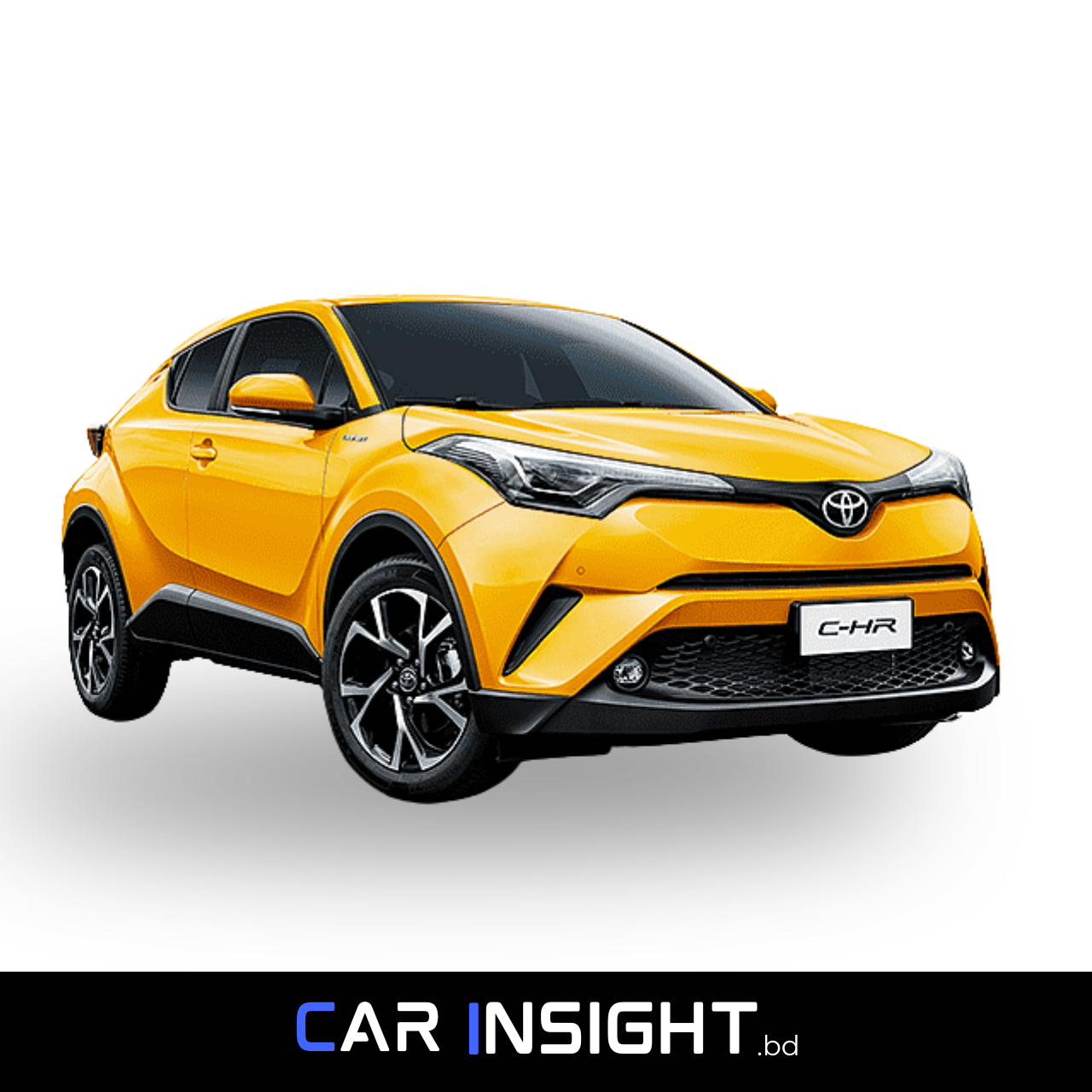

Toyota C-HR Price in Bangladesh 2026
2,700,000.00৳
Complete Car Information
Specs, features & deep insights in one place
Unbiased Reviews
Neutral, research-based automotive analysis
Always Updated
Latest models & brand updates regularly added
Expert Automotive Insights
Easy breakdown of performance & features
Compare Before You Decide
Compare cars across brands easily
Description
You’re stuck in Mirpur traffic, watching the fuel gauge drop, and wondering if there’s a smarter SUV out there than the petrol-guzzling crossover you’re currently driving. The Toyota C-HR keeps showing up in your searches — sporty coupe-like styling, hybrid badge, strong resale chatter on Bikroy. But before you visit a showroom in Gulshan or Uttara, you need real numbers: actual taka figures, not vague “starting from” teasers.
This guide covers the genuine Toyota C-HR price in Bangladesh for 2026, full specs, how it actually behaves on Dhaka’s roads and the Dhaka-Chittagong highway, real maintenance costs, and how it stacks up against the Honda Vezel and Toyota Corolla Cross — the two cars every C-HR buyer cross-shops.
Quick Overview — Is Toyota C-HR Worth Buying in Bangladesh?
The Toyota C-HR is not sold brand-new by any authorized dealer in Bangladesh — every unit on the road is a Japanese reconditioned (recon) import, typically priced between ৳26 lakh and ৳46 lakh depending on model year and grade, with the 2018–2019 G-LED package sitting in the most common ৳32–36 lakh range. It’s best for a single buyer or small couple who wants a fuel-efficient, head-turning hybrid for daily Dhaka commuting and doesn’t need rear-seat space or a large boot. The biggest advantage is the 1.8L hybrid drivetrain, which returns 18–22 km/l in real city traffic — among the best in its price band. The biggest disadvantage is rear visibility and rear-seat room: the coupe-style sloping roofline cuts into headroom and the thick D-pillar creates a real blind spot when reversing out of narrow Dhanmondi or Bashundhara lanes. If you need to regularly carry three adults in the back or a family of five, look elsewhere; if you’re a one- or two-person household prioritizing fuel savings and styling, the C-HR earns its price tag.
Toyota C-HR Price in Bangladesh 2026
The C-HR’s pricing story in Bangladesh is different from cars like the Corolla Cross or Vezel, which have both brand-new dealer channels and a recon market. Toyota never officially launched the C-HR in Bangladesh, so 100% of the supply comes through private reconditioned importers who source JDM (Japanese Domestic Market) auction units.
| Category | Price Range (BDT) | Notes |
|---|---|---|
| Reconditioned, 2016–2017 (S/G grade) | ৳26–30 lakh | Pre-facelift, older auction stock, fewer safety features |
| Reconditioned, 2018–2019 (G-LED) | ৳32–36 lakh | Most popular segment — facelifted, Toyota Safety Sense included |
| Reconditioned, 2020–2022 (Mode Nero / GR Sport) | ৳40–46 lakh | Premium trims, larger wheels, better resale |
| Privately imported brand-new unit (rare) | ৳50–60 lakh | Grey-market import only; no factory warranty in BD |
| On-road price add-on | + ৳4–6 lakh | Registration, number plate, smart card, first-year tax token |
A few things specific to the Bangladesh market push these numbers around. First, import duty: hybrid vehicles up to 1800cc benefit from a steep supplementary duty waiver compared to petrol-only cars of the same size, which is exactly why the C-HR’s 1.8L hybrid variant dominates the local market over the rarer 1.2L turbo-petrol JDM version — petrol C-HRs simply don’t clear customs as cheaply. Second, the BDT-JPY exchange rate at the time of auction purchase directly moves landed cost, so two importers quoting the same grade and year can differ by ৳1–2 lakh depending on when they bought the unit. Third, regional price variation is modest but real: Dhaka showrooms (concentrated around Gulshan, Banani, and Uttara) typically price ৳50,000–100,000 higher than equivalent Chittagong or Khulna stock due to higher showroom overhead and faster turnover demand, though buyers increasingly negotiate this gap away given how easy it is to compare listings online.
Add ৳4–6 lakh on top of the showroom price for BRTA registration, number plate, smart card issuance, and the first year’s advance tax and tax token — this is the step most first-time buyers underestimate, and it’s where many people get blindsided after agreeing on a “final” showroom price.
Full Specifications
| Spec | Detail |
|---|---|
| Engine | 1.8L Inline-4 + electric motor (Hybrid Synergy Drive) |
| Displacement | 1,797cc |
| Power output | ~122 PS (combined system output) |
| Torque | ~142 Nm (petrol engine) |
| Transmission | CVT (E-CVT) |
| Fuel type | Hybrid (Octane + electric) |
| Drivetrain | FWD (front-wheel drive) |
| Mileage — city | 18–20 km/l |
| Mileage — highway | 22–25 km/l |
| Length / Width / Height | 4,360mm / 1,795mm / 1,555mm |
| Wheelbase | 2,640mm |
| Seating capacity | 5 |
| Boot space | Compact — noticeably smaller than Corolla Cross |
| Ground clearance | ~145–150mm |
| Safety | Toyota Safety Sense (pre-collision, lane departure alert), 7 airbags (grade-dependent), Blind Spot Monitor on G-LED and above |
Note: spec sheets vary slightly between the 2016–2019 pre-facelift and 2020+ facelifted versions. Always confirm the exact grade (S, G, G-LED, Mode Nero, GR Sport) and auction sheet before paying, since feature lists differ meaningfully between them.
Detailed Review — How Does It Drive in Bangladesh?
City driving (Dhaka traffic): The C-HR’s hybrid system is genuinely built for stop-start traffic, and this is where it shines hardest in Bangladesh. At low speeds in Gulshan, Mohakhali, or Mirpur 10 traffic, the electric motor carries most of the load, so you’re frequently moving on battery alone with the petrol engine cutting in only when needed. This is the single biggest reason owners report 18–20 km/l in city use — a number that’s hard to hit with any non-hybrid SUV in this segment. Steering is light at parking speeds, which helps in the tight U-turns common around DOHS and Bashundhara R/A internal roads. The trade-off is rear visibility: the coupe roofline and high beltline create a genuine blind spot, so reversing out of narrow residential lanes without a rear camera (standard from G-LED upward) is harder than it should be.
Highway performance (Dhaka–Chittagong, Dhaka–Sylhet): On the highway, the C-HR cruises comfortably at 100–110 km/h, and the hybrid system shifts to relying more on the petrol engine, which is where the mileage gap with non-hybrid rivals narrows. Expect 22–25 km/l on a steady highway run, dropping toward 20 km/l if you’re overtaking trucks frequently on the N1. Acceleration for overtaking is adequate but not quick — this is a fuel-efficiency-tuned hybrid, not a performance car, so plan your overtakes on two-lane stretches with more lead time than you would in a turbo-petrol SUV.
Fuel efficiency in real BD conditions: The numbers above (18–20 city, 22–25 highway) assume reasonably maintained hybrid battery health. This matters more in Bangladesh than in Japan, because hybrid battery degradation accelerates with the heat — and Dhaka’s ambient temperature regularly exceeds what the battery pack was designed around in temperate Japan. A C-HR with a tired hybrid battery (common past 100,000km on units that sat in direct sun for years) will see mileage drop toward 14–15 km/l in the city, with the petrol engine doing more of the work. Always ask for hybrid battery health/state-of-charge data from the importer before buying.
Ride comfort on Bangladeshi roads: The C-HR’s suspension is tuned firmer than a typical family crossover, which Toyota did deliberately to support its sportier, low-slung styling. On smooth roads (Dhaka’s better arterial roads, the elevated expressway sections) this feels sharp and controlled. On broken sections — much of old Dhaka, parts of Mirpur, rural stretches off the highway — the firmer suspension transmits more jolt through potholes and speed bumps than a Corolla Cross or Vezel would. The relatively modest ~145mm ground clearance also means you need to slow down meaningfully for speed bumps (often unmarked) that a taller SUV would shrug off.
AC performance in tropical heat: The C-HR’s AC compressor on the hybrid system benefits from electric assist at idle (since the engine doesn’t need to stay running just to power the compressor), so cooling at long traffic stops in Dhaka’s 35°C+ summer afternoons is noticeably better than on non-hybrid competitors that rely purely on engine-driven AC. Most owners report the cabin cools within 3–4 minutes even with all four windows having been closed in direct sun.
Features Breakdown
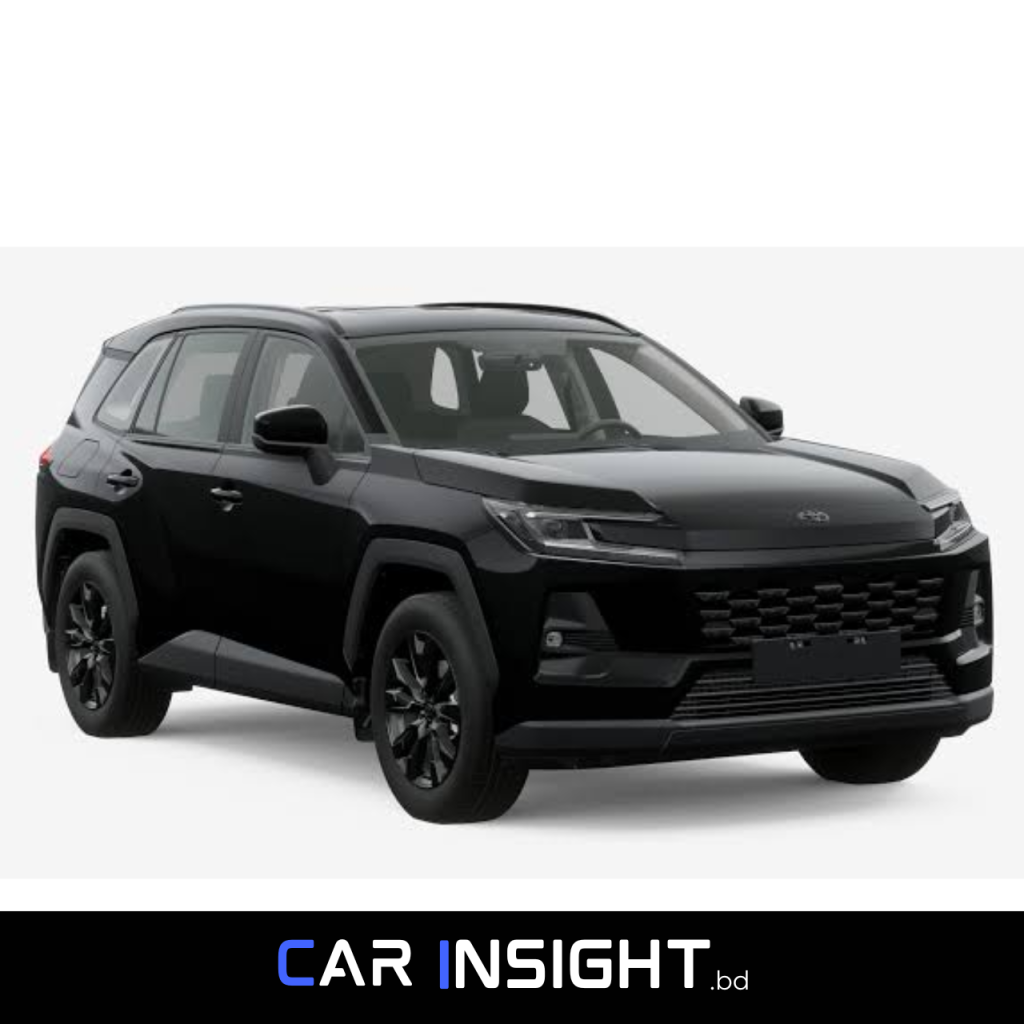
Exterior design: The C-HR’s diamond-cut bodywork and sloping coupe roofline are its main selling point — it doesn’t look like every other crossover on Dhaka’s roads, and that visual distinction has real resale value in a market where buyers often choose by appearance first.
Interior quality: Soft-touch dashboard panels and a driver-focused cockpit layout are present from the G grade upward; the base S grade uses harder plastics and a simpler instrument cluster.
Infotainment: JDM units come with Japanese-spec touchscreen systems (Gathers or similar) that typically need a local aftermarket Android head unit swap for English-language navigation and Bangla-friendly usability — budget ৳15,000–25,000 for this if the importer hasn’t already done it.
Safety: Toyota Safety Sense (pre-collision warning, lane departure alert) comes standard from G-LED grade onward in the JDM lineup; the base S grade in early model years may lack it, so confirm grade carefully — this is one of the most commonly misrepresented details in online listings.
Comfort features: Push-start, leather or leather-look seats, and a 360-degree camera (grade-dependent) are common in 2019+ stock; rear AC vents are present but rear legroom remains the C-HR’s weakest comfort attribute for taller passengers.
Global spec vs Bangladesh-imported version: The C-HR sold in Bangladesh is exclusively JDM (Japan domestic), not the European or North American spec — meaning some features advertised in international reviews (different infotainment, certain trim names like “Limited” used in the US) don’t apply to what’s actually available here. Always cross-check the grade name against JDM-specific terminology (S, G, G-LED, Mode Nero, GR Sport) rather than US/European trim names.
Fuel Economy — Real-World Numbers in Bangladesh
| Condition | Toyota C-HR Hybrid | Honda Vezel Hybrid | Toyota Corolla Cross Hybrid |
|---|---|---|---|
| City (Dhaka traffic) | 18–20 km/l | 18–22 km/l | 18–24 km/l |
| Highway | 22–25 km/l | 20–25 km/l | 24–28 km/l |
The Corolla Cross’s larger 1.8L hybrid system with a bigger battery pack edges out the C-HR slightly on highway runs, while the Vezel and C-HR are closely matched in city conditions. None of these differences are large enough to be the deciding factor on their own — grade, condition, and battery health matter more than the badge.
CNG conversion note: Hybrid drivetrains like the C-HR’s are not suitable candidates for CNG conversion — the combined petrol-electric power management system isn’t designed to integrate with aftermarket CNG kits, and attempting it risks damaging the hybrid control unit. If CNG running cost is your priority, a hybrid crossover is the wrong category of car entirely.
Maintenance Cost in Bangladesh
This is the section most competitor articles skip, and it’s where a lot of buyer regret happens after the purchase.
Estimated annual service cost: Routine servicing (oil change, filters, brake inspection) for a C-HR in Dhaka typically runs ৳8,000–15,000 per service at an independent Toyota specialist garage, with most owners servicing every 5,000–6,000km. Hybrid-specific health checks (battery diagnostics) aren’t part of routine service and need to be requested separately, ideally once a year.
Spare parts availability: Standard mechanical parts (brake pads, filters, suspension bushings) are easy to source locally through Dhaka’s used-parts and genuine-parts network around Banani and Elephant Road. Hybrid-specific components — particularly the hybrid battery pack itself and certain hybrid control modules — are not stocked locally in most cases and need to be imported from Japan, which can mean a 2–4 week wait and a meaningfully higher bill if the hybrid battery itself ever needs replacement (expect ৳1.5–3 lakh for a full hybrid battery replacement, sourced as a used JDM unit rather than new).
Common issues reported by BD owners: The most frequently mentioned complaint in owner forums and Bikroy comment threads is hybrid battery degradation on higher-mileage units (typically past 80,000–100,000km), accelerated by Dhaka’s heat and by cars that sit parked outdoors in direct sun for long stretches. The second most common issue is the rear door check strap and the panoramic roof seal (on units with the sunroof option) developing minor leaks after a few rainy seasons if not maintained. Electrical gremlins tied to the JDM infotainment unit after an aftermarket head unit swap are also a recurring minor annoyance, usually fixable but worth checking before purchase.
Who Should Buy the Toyota C-HR?
Family buyers: Not the ideal pick. Rear seat space and boot capacity are tight for a family of four or more — the Corolla Cross or Vezel serve families better.
Corporate use / daily commuters: Strong fit. If you’re a single executive or professional doing a daily Dhaka commute and want something distinctive in the office parking lot with genuinely low fuel costs, the C-HR fits well.
First-time buyers: Workable, but go in informed. The hybrid system and JDM-specific parts situation mean a first-time buyer should lean heavily on a trusted importer with a verifiable auction sheet rather than buying on styling alone.
Upgrade buyers (coming from a sedan or hatchback): Good fit. If you’re moving up from a Corolla or Axio sedan and want SUV styling without going all the way to a Corolla Cross or RAV4-sized vehicle, the C-HR is a natural, fuel-efficient step up.
Toyota C-HR vs Competitors — Quick Comparison
| Toyota C-HR (Hybrid) | Honda Vezel (Hybrid) | Toyota Corolla Cross (Hybrid) | |
|---|---|---|---|
| Price (recon, BDT) | ৳26–46 lakh | ৳27–52 lakh | ৳41–52 lakh |
| Engine | 1.8L Hybrid | 1.5L Hybrid (e:HEV) | 1.8L Hybrid |
| Mileage (city) | 18–20 km/l | 18–22 km/l | 18–24 km/l |
| Boot space | Compact, tightest of the three | Moderate | Largest of the three |
| Verdict | Best styling and value for solo/couple buyers prioritizing distinct looks | Best balance of efficiency and practicality for small families | Best pick for families needing space, at a meaningfully higher price |
Frequently Asked Questions
Is the Toyota C-HR good for Dhaka traffic?
Yes — its hybrid system is specifically suited to stop-start driving, returning 18–20 km/l in real Dhaka traffic. The main drawback for city use is the rear visibility, since the coupe-style roofline creates a blind spot when reversing in narrow lanes, so a rear camera (standard on G-LED and above) is worth prioritizing.
What is the maintenance cost of the Toyota C-HR in Bangladesh?
Routine servicing runs roughly ৳8,000–15,000 per visit at independent specialists, every 5,000–6,000km. The bigger cost risk is the hybrid battery, which isn’t locally stocked and can cost ৳1.5–3 lakh to replace with a used JDM unit if it degrades — most relevant on units past 80,000–100,000km.
How much import duty applies to the Toyota C-HR?
As a hybrid under 1800cc, the C-HR benefits from a substantial supplementary duty waiver compared to an equivalent petrol-only vehicle, which is why nearly all C-HR units sold in Bangladesh are the 1.8L hybrid rather than the rarer JDM turbo-petrol version. Exact landed cost depends on CIF value, vehicle age depreciation allowance, and the BDT-JPY exchange rate at time of import, so final duty figures vary unit to unit.
Is the Toyota C-HR available brand-new in Bangladesh?
No. Toyota has never officially launched the C-HR through an authorized dealer in Bangladesh. Every unit in the market — without exception — is either a Japanese reconditioned import or, rarely, a privately imported brand-new grey-market unit costing ৳50–60 lakh with no factory warranty support locally.
Is the Toyota C-HR a good choice for a family in Bangladesh?
It’s a workable but not ideal choice. Rear legroom and boot space are the tightest in its competitive set — the Honda Vezel offers more practicality at a similar price, and the Toyota Corolla Cross offers significantly more space if your budget stretches to ৳41 lakh and above.
Conclusion
The Toyota C-HR earns its place in Bangladesh’s hybrid SUV market on styling and city fuel economy, not on space or practicality. For a solo driver or couple in Dhaka who wants a distinctive-looking, genuinely fuel-efficient daily driver in the ৳32–36 lakh sweet spot, it’s a sound buy — provided you verify hybrid battery health and grade-specific features before handing over money to any importer.
Check Out More TOYOTA Car Price:
- Toyota Allion Price in Bangladesh
- Toyota Crown RS Price in Bangladesh
- Toyota Corolla Price in Bangladesh
- Toyota Corolla Cross Price in Bangladesh
- Toyota Camry Price in Bangladesh
- Toyota Avalon Price in Bangladesh
- Toyota RAV4 Price in Bangladesh
- Toyota RAV4 Prime Price in Bangladesh
- Toyota Highlander Price in Bangladesh
- Toyota 4Runner Price in Bangladesh
- Toyota Aqua Price in Bangladesh
- Toyota Sequoia Price in Bangladesh
- Toyota Land Cruiser Price in Bangladesh
- Toyota Land Cruiser Prado Price in Bangladesh
- Toyota Crown Signia Price in Bangladesh
- Toyota bZ3 Price in Bangladesh
- Toyota Prius Price in Bangladesh
- Toyota Prius Prime Price in Bangladesh
- Toyota Venza Price in Bangladesh
- Toyota Tacoma Price in Bangladesh
- Toyota Innova Zenix Price in Bangladesh
- Toyota Veloz Price in Bangladesh
- Toyota Alphard Price in Bangladesh
- Toyota Voxy Price in Bangladesh
- Toyota GR86 Price in Bangladesh
- Toyota GR Supra Price in Bangladesh
- Toyota GR Corolla Price in Bangladesh
- Toyota GR Yaris Price in Bangladesh
- Toyota Yaris Cross Price in Bangladesh
- Toyota Urban Cruiser Price in Bangladesh
- Toyota Mirai Price in Bangladesh
Customer Reviews
Get the best deal for this car
Interested in buying this vehicle? Tell us a few details and verified dealers will reach out with their best offer.
Request Submitted!
Thank you! Verified dealers will contact you shortly with their best offers.