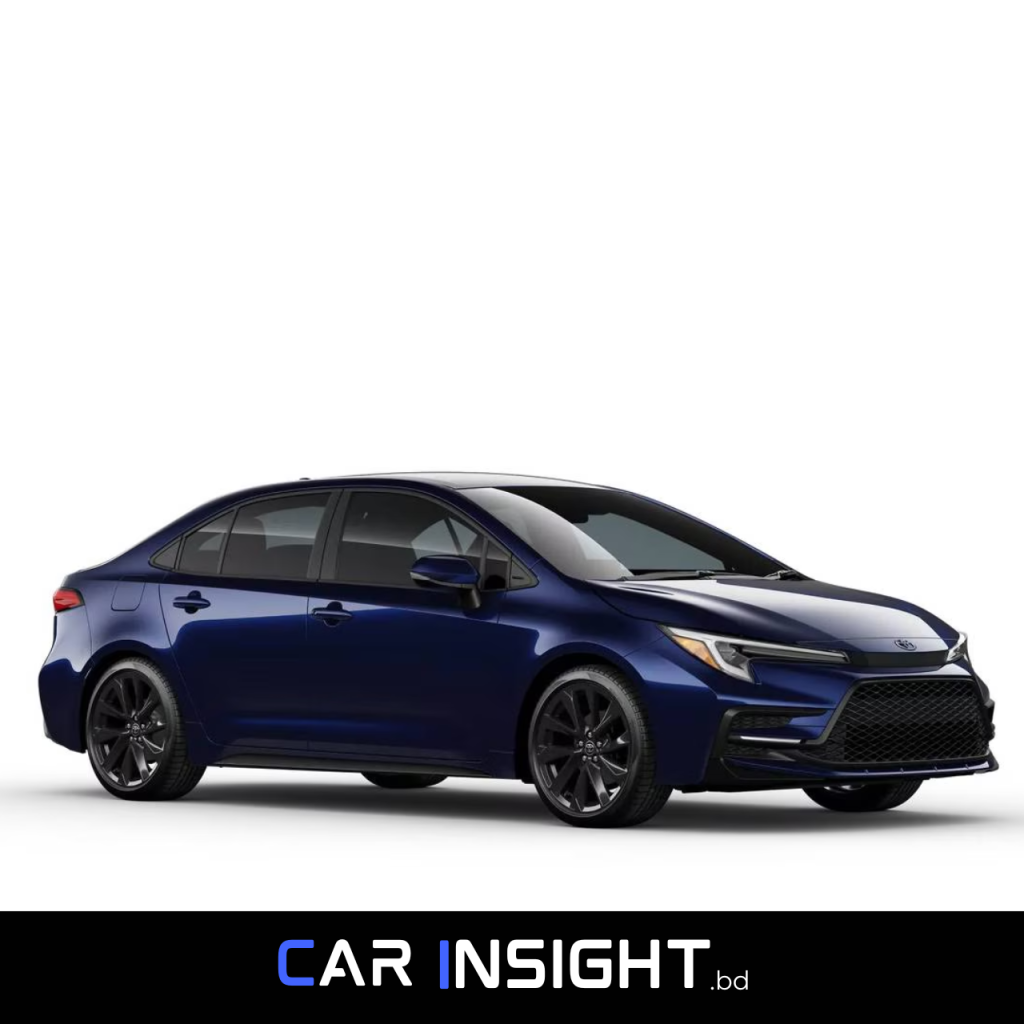
You need one car that handles the school run through Uttara, a weekend trip up the Dhaka–Chittagong highway, and still looks the part parked outside a client meeting in Gulshan — the Audi Q3 is Audi’s answer for the buyer who’s outgrown a sedan but doesn’t want the size or running cost of a Q5. This guide sets out a realistic Audi Q3 price in Bangladesh for 2026, how it actually performs on Dhaka’s roads and in the country’s tropical heat, what it costs to maintain here, and who it genuinely suits versus its closest rivals in the same price band.
Quick Overview — Is Audi Q3 Worth Buying in Bangladesh?
A reconditioned Audi Q3 in Bangladesh typically runs ৳48–65 lakh for a 2019–2021 unit and ৳68–95 lakh for a 2022–2024 later-spec or S line car, with brand-new imports through private full-duty channels landing higher still given Audi’s all-new third-generation Q3 launched globally in 2026. It suits a Dhaka-based family or professional who wants genuine quattro AWD capability, compact-SUV practicality, and Audi’s cabin quality, without stepping up to the Q5’s price and running cost. The biggest advantage is the best balance in Audi’s SUV range between usable boot space, ride comfort, and manageable maintenance cost. The biggest disadvantage is the same one that applies to every reconditioned Audi here: there’s no authorised Audi service centre in Bangladesh, so ownership depends entirely on finding — and sticking with — a trustworthy independent specialist.
Audi Q3 Price in Bangladesh 2026
| Variant / Condition |
Price Range (BDT) |
| Reconditioned (2019–2021), 35 TFSI (FWD) |
৳48,00,000 – 60,00,000 |
| Reconditioned (2019–2021), 40 TFSI quattro |
৳58,00,000 – 70,00,000 |
| Reconditioned (2022–2024), 40/45 TFSI quattro, S line |
৳70,00,000 – 95,00,000 |
| New/near-new import, full duty paid |
৳1,00,00,000 – 1,20,00,000 |
| On-road price (registration, tax token, insurance) |
Add ৳3,00,000 – 5,50,000 to above |
Audi has no official distributor in Bangladesh, so every Q3 here arrives via reconditioned import or private order, and engine displacement is the main lever on final price: the front-wheel-drive 1.4–1.5L 35 TFSI clears at a noticeably lower duty than the 2.0L 40/45 TFSI quattro variants, which is why two Q3s of the same model year can differ by ৳10–15 lakh depending purely on drivetrain. Dhaka’s specialist importers around Gulshan and Banani hold the bulk of available stock; Chittagong listings exist but in smaller numbers, and buyers there should factor in travel to Dhaka for both purchase inspection and ongoing servicing.
Full Specifications
| Spec |
Detail (typical BD-spec unit, 2019–2024 generation) |
| Engine |
1.5L turbocharged inline-4 (35 TFSI) or 2.0L turbocharged inline-4 (40/45 TFSI) |
| Power |
150 hp (35 TFSI) / 190 hp (40 TFSI) / 230 hp (45 TFSI) |
| Torque |
250 Nm (35 TFSI) / 320 Nm (40 TFSI) / 400 Nm (45 TFSI) |
| Transmission |
7-speed S tronic dual-clutch automatic |
| Drivetrain |
Front-wheel drive (35 TFSI) or quattro AWD (40/45 TFSI) |
| Fuel type |
Petrol (Octane) |
| Mileage — city |
9–11 km/l |
| Mileage — highway |
14–16 km/l |
| Length x Width x Height |
4,484 x 1,849 x 1,585 mm |
| Wheelbase |
2,680 mm |
| Seating |
5 |
| Boot space |
530 litres; expands to approximately 1,525 litres with rear seats folded |
| Safety |
ABS, ESC, 6+ airbags, parking sensors standard; adaptive cruise, lane-assist available on higher trims |
The Q3’s 530-litre boot is a genuine practical advantage over the smaller Q2 (355L) and puts it firmly in usable-family-SUV territory, while its 170mm ground clearance handles Bangladesh’s speed humps and moderate flooding better than most sedans in this price band. Note that Audi’s third-generation Q3, launched globally in 2026 with a 255hp 2.0L engine and standard AWD, has not yet meaningfully entered Bangladesh’s reconditioned market — nearly everything available locally today is the second-generation (2019–2024) car detailed above.
Detailed Review — How Does It Drive in Bangladesh?
Through Dhaka’s daily grind — Gulshan to Banani, the Mohakhali flyover, crawling past Karwan Bazar — the Q3’s raised seating position and compact-SUV proportions make it noticeably easier to judge in traffic than a low-slung sedan, while still being manageable in tighter spaces around Uttara’s residential streets, unlike the larger Q5 or Q7. The 40 TFSI quattro’s 320 Nm of torque provides confident acceleration away from signals, useful given how aggressively traffic merges at major Dhaka junctions.
On the Dhaka–Chittagong highway, the Q3 cruises comfortably at 110–120 km/h, with the quattro variants delivering noticeably more highway stability than the FWD 35 TFSI, particularly through the sweeping sections near Cumilla or when passing trucks in gusty conditions. The 45 TFSI’s 400 Nm makes highway overtaking effortless, though it’s the rarer and pricier variant to find as a reconditioned import locally — most Q3s on Bangladeshi roads run the 40 TFSI, which is more than adequate for real-world use.
Real-world fuel efficiency lands at 9–11 km/l in Dhaka traffic and 14–16 km/l on the highway, a meaningful step up from Audi’s larger sedans and SUVs, and competitive within the compact-luxury-SUV segment. Expect these figures to sit 15–20% below international brochure numbers once constant AC use and Dhaka’s stop-start congestion are factored in.
Ride comfort over Bangladesh’s less forgiving surfaces is where the Q3 earns its keep relative to lower-riding Audi sedans: its 170mm ground clearance and slightly softer suspension tune than the sportier Q2 absorb speed humps and moderate potholes around Mirpur and Tejgaon with genuine composure, without feeling floaty on the highway. It’s not as plush as an A6 or A8 L over the roughest patched stretches near Tangail, but it’s a clear step up from any Audi sedan on the market here for buyers who regularly encounter degraded road surfaces.
AC performance holds up well through Dhaka’s hot, humid months — dual-zone climate control (standard on most imports) cools the cabin evenly, and the slightly larger cabin volume than the Q2 means it takes marginally longer to cool from a hot start but maintains temperature more consistently on longer highway runs. Overall, the Q3 is the most balanced Audi in this market for buyers who want SUV practicality without stepping into Q5/Q7 running costs — a genuine sweet spot rather than a compromise.
Features Breakdown
Exterior: Audi’s singleframe grille scaled to mid-compact proportions, LED headlights (Matrix LED on higher trims) standard on most imports, and 18–19 inch alloy wheels common on S line units. The 2019+ generation’s more angular, upright design reads noticeably more modern than the outgoing first-generation Q3 still occasionally seen in the used market.
Interior: The 10.25-inch (or larger on higher trims) digital Virtual Cockpit instrument cluster comes standard across most reconditioned imports of this generation, alongside an 8.8–10.1 inch MMI touchscreen — a meaningful upgrade in usability over the older button-and-dial layout of the first-generation Q3. Leather or leather-effect upholstery and heated front seats are common on Premium Plus/S line trims.
Infotainment: Wireless Apple CarPlay and Android Auto are present on most 2020+ imports; earlier units in this generation may require confirmation of wireless capability, as some early production runs shipped with wired-only connectivity before a running change.
Safety: Adaptive cruise control, lane-keep assist, and blind-spot monitoring appear on Premium Plus/S line-equivalent trims but are inconsistently fitted on base reconditioned units — verify against the specific chassis’s options list rather than the trim badge alone. Euro NCAP awarded the Q3’s platform generation a 5-star rating in its assessment cycle.
Note on BD-spec vs global-spec: As with every Audi sold in Bangladesh, every Q3 here is a reconditioned import from a source market (commonly Japan, the UK, or the Middle East) rather than a locally distributed car — feature levels vary meaningfully between individual units even within the same model year. Always request the original inspection sheet before purchase.
Fuel Economy — Real-World Numbers in Bangladesh
| Condition |
Audi Q3 (40 TFSI quattro) |
BMW X1 (sDrive18i) |
Mercedes GLA (GLA200) |
| City (Dhaka traffic) |
9–11 km/l |
9–11 km/l |
9–10 km/l |
| Highway |
14–16 km/l |
14–16 km/l |
13–15 km/l |
The Q3’s fuel efficiency is closely matched with its two closest rivals in this price band, making running cost a near wash between them — the real differentiator is quattro’s standard availability on the Q3’s higher trims versus the X1 and GLA’s typically front-wheel-drive base configurations. CNG conversion is not recommended for the same reasons that apply across every turbocharged, emissions-integrated European engine in this guide — it risks both engine management reliability and resale value, and a converted Q3 would be materially harder to sell to Bangladesh’s relatively small pool of Audi buyers.
Maintenance Cost in Bangladesh
This is the section that separates a well-researched purchase from an expensive surprise six months in.
Annual service cost: Budget ৳22,000–38,000 for routine servicing at an independent European-car specialist in Dhaka — moderate within Audi’s Bangladesh range, above the Q2 but below the A6, A7, and A8 L, reflecting the Q3’s mainstream 2.0 TFSI engine shared across several Volkswagen Group models. There is no Audi-authorised service centre in Bangladesh; servicing routes through the same independent specialists handling other Audi, VW, and Skoda imports.
Spare parts availability: Consumables are well stocked locally given the Q3’s shared mechanical platform with more common Volkswagen Group SUVs sold regionally, a genuine practical advantage over Audi’s more bespoke sedans. Audi-specific trim, MMI components, and quattro drivetrain parts still require import from Dubai, Singapore, or the UK, typically adding 2–4 weeks lead time for anything beyond routine consumables.
Common issues reported by BD owners: Owners and specialist garages in Dhaka most frequently flag minor electrical sensor faults (parking sensors, MMI freezing) on higher-mileage units, and — as with other dual-clutch Audi models — occasionally jerky low-speed behaviour from the 7-speed S tronic gearbox in stop-start traffic, a characteristic of dual-clutch transmissions generally rather than a Q3-specific flaw. Suspension bushings show earlier wear than in Europe given Bangladesh’s road surface variety, worth checking at each service interval.
Bottom line: the Q3 sits in a genuinely favourable maintenance position within Audi’s Bangladesh lineup — meaningfully cheaper to keep running than the brand’s sedans and larger SUVs, while still carrying the general caveat that applies to every Audi here: budget more time and money for anything beyond routine service than you would for a Toyota or Honda in the same price bracket.
Who Should Buy the Audi Q3?
Family buyers: A strong fit. The 530-litre boot, comfortable ride, and manageable footprint make it genuinely practical for a family of four navigating Dhaka’s school runs and weekend trips, without the size and running cost of a full-size SUV.
Corporate/executive use: Works well for an executive who wants a badge-appropriate vehicle with more practicality and higher seating than a sedan, particularly one who regularly drives themselves rather than being chauffeured.
First-time luxury buyers: One of the better entry points into Audi ownership in Bangladesh — lower running costs than the sedan range, reasonable parts access thanks to shared Volkswagen Group components, and enough size to feel like a genuine step up from a mainstream SUV.
Upgrade buyers (from Toyota/Honda compact SUVs): A natural and relatively low-risk upgrade — the jump in cabin quality and driving refinement is significant, while the running-cost increase is more manageable than jumping straight to an A6 or Q5.
Audi Q3 vs Competitors — Quick Comparison
|
Audi Q3 (40 TFSI quattro) |
BMW X1 (sDrive18i) |
Mercedes GLA (GLA200) |
| Price (reconditioned) |
৳58L – 95L |
৳55L – 90L |
৳60L – 95L |
| Engine |
2.0L turbo I4, 190 hp (quattro AWD) |
1.5L turbo I3, 136 hp (FWD) |
1.3L turbo I4, 163 hp (FWD) |
| Mileage (city) |
9–11 km/l |
9–11 km/l |
9–10 km/l |
| Boot space |
530 L |
540 L |
435 L |
| Verdict |
Best all-round balance of AWD capability, boot space, and manageable running cost |
Largest boot and typically the most affordable entry point |
Sportiest styling; smallest boot of the three |
Frequently Asked Questions
Is the Audi Q3 good for Dhaka traffic?
Yes — its raised seating position and compact-SUV footprint strike a good balance between visibility in traffic and manoeuvrability through narrower streets in Uttara and Mirpur. The quattro variants also handle monsoon flooding on regularly used routes better than most sedans in this price band.
What is the maintenance cost of the Audi Q3 in Bangladesh?
Routine annual servicing runs ৳22,000–38,000 through an independent European-car specialist, moderate within Audi’s local range and helped by parts commonality with other Volkswagen Group models sold in the region. Audi-specific components still require import, typically 2–4 weeks lead time.
How much import duty applies to an Audi Q3 in Bangladesh?
Duty is calculated primarily on engine displacement, which is why the front-wheel-drive 1.5L 35 TFSI clears noticeably cheaper than the 2.0L 40/45 TFSI quattro variants. Get a written duty breakdown from your importer before agreeing a price, since this drives much of the spread in the market.
Is the Audi Q3 or Q2 better for a Bangladeshi family?
The Q3 offers substantially more boot space (530L vs 355L) and a more comfortable ride over rough roads, making it the better choice for most families; the Q2 suits a single professional or couple prioritising the tightest turning circle and lowest running cost in Audi’s SUV range.
Is the Audi Q3 reliable in Bangladesh’s climate and roads?
It holds up reasonably well — AC performance is strong through Dhaka’s hot season, and the 170mm ground clearance handles typical monsoon conditions and road imperfections better than Audi’s sedans. The main reliability consideration isn’t the car’s inherent durability but Bangladesh’s thin authorised-service network, which makes finding a trusted independent specialist essential from day one.
Conclusion
The Audi Q3 offers the best overall balance in Audi’s Bangladesh lineup — genuine SUV practicality, quattro capability, and meaningfully lower running costs than the brand’s sedans, at ৳48 lakh to 1.2 crore depending on generation and drivetrain. For a Dhaka family or professional wanting Audi ownership without the largest models’ running costs, it’s the most sensible starting point in the range.
Check Out More Audi Car Price: