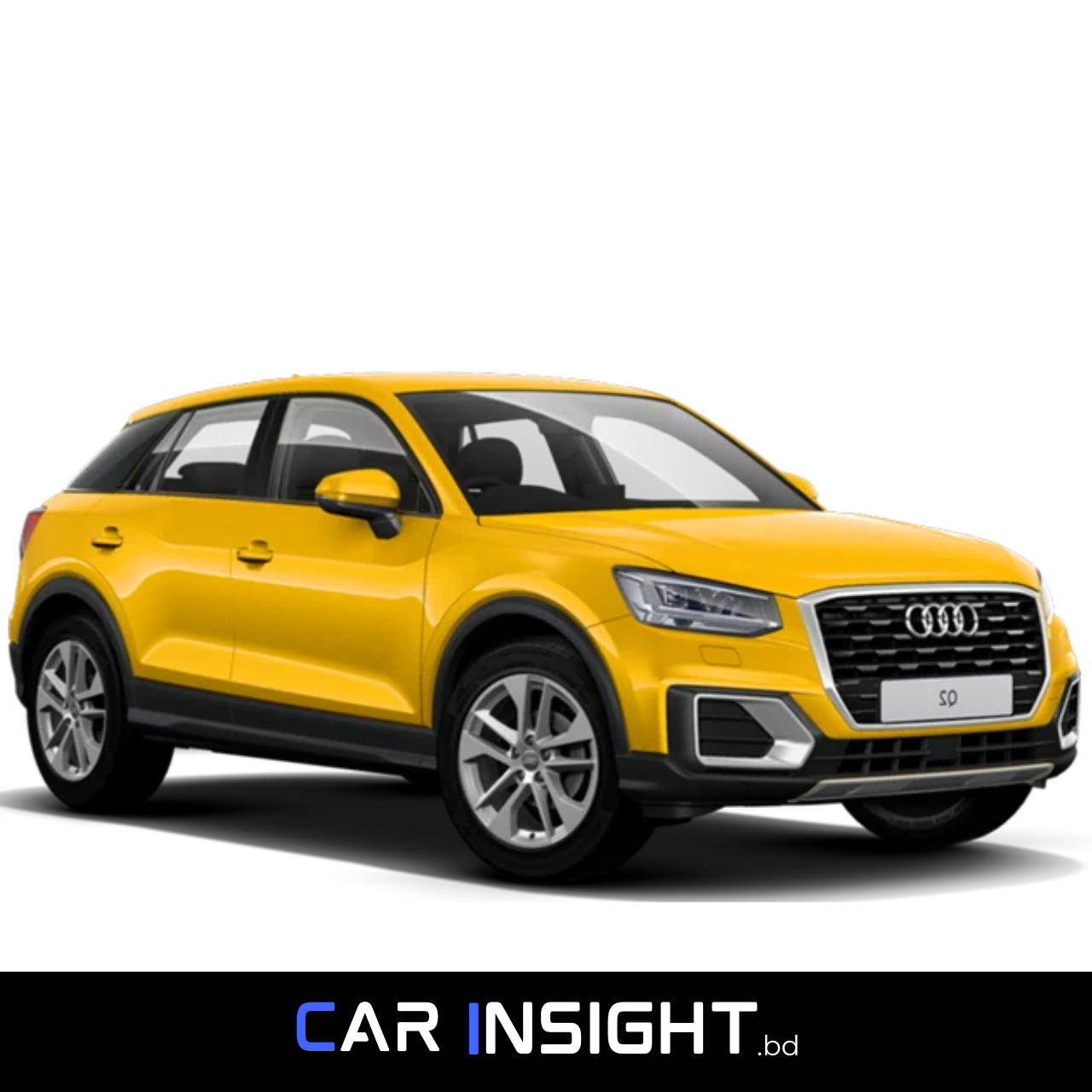
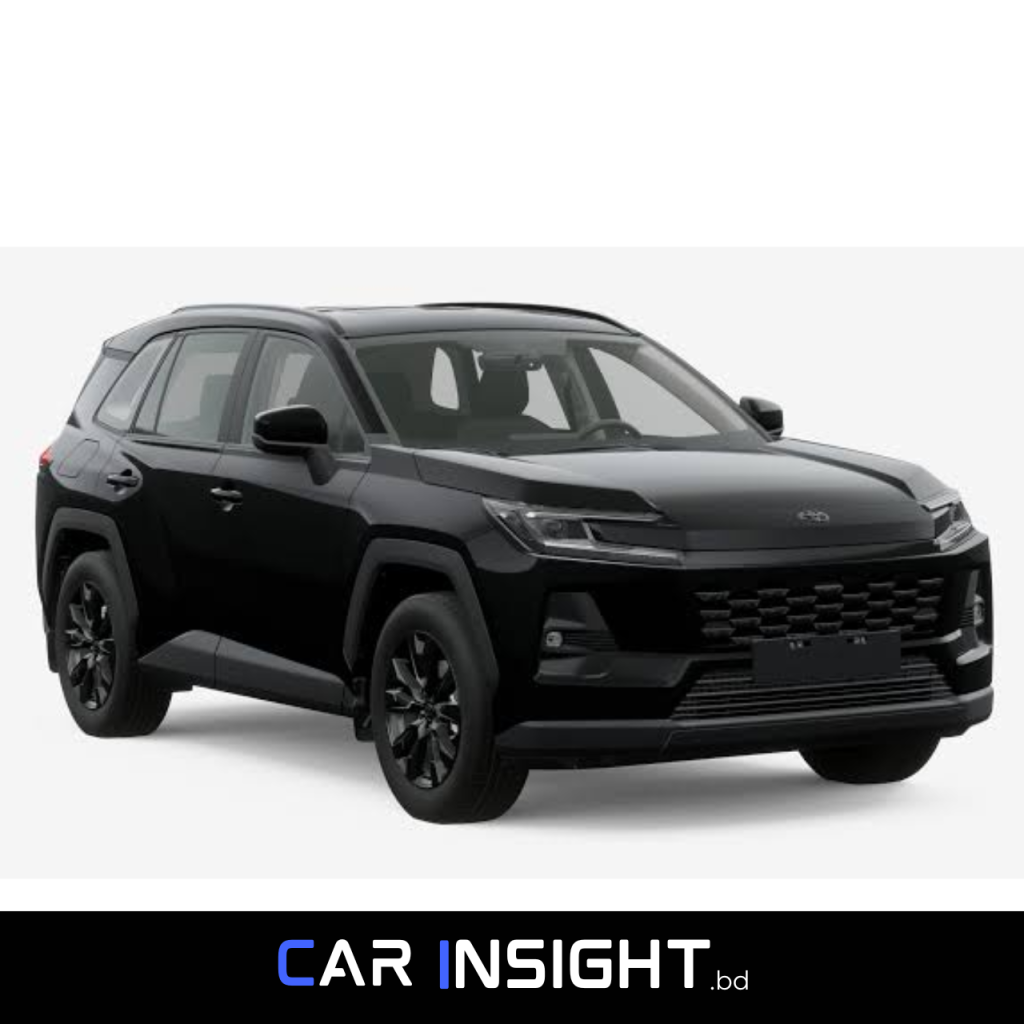
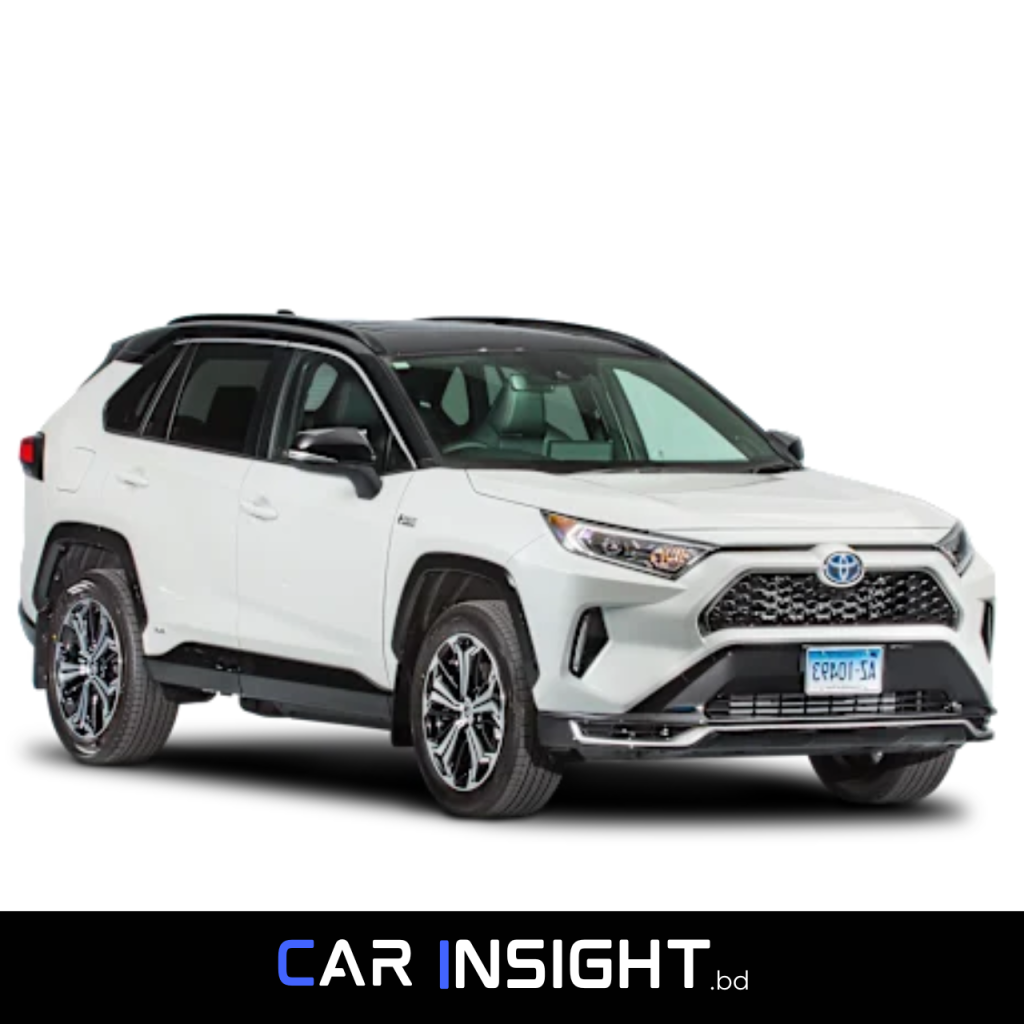
You want the Audi badge and quattro capability for Dhaka’s flooded monsoon streets, but a full-size Q5 or Q7 feels like overkill for parking outside a Gulshan apartment or squeezing through Mirpur’s narrower lanes — the Q2 is Audi’s answer to exactly that brief. It’s also, as of Audi’s own 2026 production wind-down, a model reaching the end of its life globally with no direct successor planned, which matters more for a Bangladeshi buyer than for almost anyone else, because it changes the long-term parts picture. This guide covers the real Audi Q2 price in Bangladesh for 2026, how the compact crossover actually handles Dhaka traffic and monsoon flooding, what it costs to run here, and whether buying into a discontinued model makes sense for your situation.
Quick Overview — Is Audi Q2 Worth Buying in Bangladesh?
A reconditioned Audi Q2 in Bangladesh runs roughly ৳45–65 lakh for a 2017–2019 unit and ৳65–85 lakh for a 2020–2023 facelifted car with the 40 TFSI quattro engine; new/near-new imports are increasingly rare to source given the model’s 2026 discontinuation. It suits a single professional or small family in Dhaka who wants Audi styling, compact-SUV ground clearance for monsoon streets, and a lower duty bracket than the brand’s larger SUVs. The biggest advantage is manoeuvrability — genuinely the easiest Audi SUV to park and thread through Dhaka’s narrower streets. The biggest disadvantage is cargo space that’s tight even for a small family, combined with the fact that you’re now buying into a discontinued model, meaning the already-thin Bangladesh parts pipeline will only get thinner over the ownership period.
Audi Q2 Price in Bangladesh 2026
| Variant / Condition |
Price Range (BDT) |
| Reconditioned pre-facelift (2017–2019), 30/35 TFSI |
৳45,00,000 – 60,00,000 |
| Reconditioned pre-facelift (2017–2019), 40 TFSI quattro |
৳58,00,000 – 68,00,000 |
| Reconditioned facelift (2020–2023), 35 TFSI |
৳62,00,000 – 72,00,000 |
| Reconditioned facelift (2020–2023), 40 TFSI quattro |
৳70,00,000 – 85,00,000 |
| On-road price (registration, tax token, insurance) |
Add ৳2,50,000 – 4,50,000 to above |
Audi has no official distributor or dealership network in Bangladesh, so the Q2 arrives entirely through reconditioned import channels, and it sits in the entry point of Audi’s SUV pricing here largely because of its sub-2000cc engine options, which land in a friendlier duty bracket than the Q3, Q5, or Q7. The front-wheel-drive 30/35 TFSI variants clear at a lower effective duty than the 40 TFSI quattro, which is the main reason two visually similar Q2s can differ by ৳10–15 lakh. Because Audi discontinued the Q2 in 2026 with no replacement, expect the available pool of import-ready units to shrink over the coming years — this is a car to buy on a specific unit’s condition now rather than wait for a better-priced example later.
Full Specifications
| Spec |
Detail (typical BD-spec unit) |
| Engine |
1.4L or 2.0L turbocharged inline-4 (30/35 TFSI: 1.4L or smaller; 40 TFSI: 2.0L) |
| Power |
116–150 hp (30/35 TFSI) / 190 hp (40 TFSI quattro) |
| Torque |
250 Nm (35 TFSI) / 320 Nm (40 TFSI quattro) |
| Transmission |
7-speed S tronic dual-clutch automatic |
| Drivetrain |
Front-wheel drive (30/35 TFSI) or quattro AWD (40 TFSI) |
| Fuel type |
Petrol (Octane) |
| Mileage — city |
9–11 km/l |
| Mileage — highway |
14–16 km/l |
| Length x Width x Height |
4,208 x 1,794 x 1,508 mm |
| Wheelbase |
2,601 mm |
| Seating |
5 |
| Boot space |
355 litres (quattro); up to 1,000 litres with rear seats folded |
| Safety |
ABS, ESC, 6 airbags, parking sensors; adaptive cruise and lane-assist on higher trims only |
Note the meaningful spec gap between the FWD 30/35 TFSI cars and the AWD 40 TFSI quattro — the quattro variant is the one worth targeting specifically if monsoon traction matters to you, since it’s the only Q2 configuration with genuine all-wheel drive. The 355-litre boot with AWD hardware fitted is genuinely small for the class; confirm this works for your actual cargo needs before committing, especially if you’ll regularly carry more than airport luggage or a weekly grocery run.
Detailed Review — How Does It Drive in Bangladesh?
In Dhaka’s tight lanes around Mirpur and the older parts of the city, the Q2’s compact footprint is the single biggest practical advantage over every other Audi SUV. It’s noticeably easier to place in narrow gaps between rickshaws and parked cars, and parking in Gulshan or Banani’s tighter basement car parks is a non-event compared to squeezing in a Q5 or Q7. The 2.0 TFSI’s 320 Nm of torque gives it genuinely brisk response off the line at signals, useful for merging into Dhaka’s aggressive traffic flow.
Highway performance on the Dhaka–Chittagong route is competent rather than outstanding — the Q2 cruises comfortably at 100–110 km/h with acceptable wind noise for its compact size, though it lacks the sheer stability of a larger, heavier Audi at speed. The 40 TFSI quattro variant handles crosswinds and the odd unexpected pothole swerve near Cumilla with more composure than the FWD 30/35 TFSI, which can feel slightly less planted at highway speeds when fully loaded.
Real-world fuel efficiency lands at 9–11 km/l in Dhaka traffic and 14–16 km/l on the highway — solidly better than any of Audi’s larger sedans or SUVs, a direct benefit of the smaller engine and lighter kerb weight (around 1,400–1,520 kg depending on variant). This is the most fuel-efficient Audi covered across CarInsight.bd’s Audi range so far, which matters given how fuel prices factor into total ownership cost for a daily-driven car.
Ride comfort over Bangladesh’s rougher surfaces is a mixed picture. The Q2’s compact wheelbase and firmer, sportier suspension tune (inherited from its Volkswagen Group MQB platform siblings) transmit more of Dhaka’s speed humps and unmarked potholes than a longer-wheelbase Audi would, particularly on Mirpur’s service roads and older Chittagong streets. It’s not uncomfortable, but buyers coming from a plusher sedan should expect a firmer ride. Ground clearance (around 150–160mm) is adequate for monsoon flooding on regularly used routes but not for genuinely deep standing water — treat it the same as any compact crossover in this respect, not as an off-roader.
AC performance is a clear strength: the compact cabin cools quickly even in peak April–September heat, and dual-zone climate control (standard on most imported units) holds temperature evenly on shorter Dhaka commutes. On longer highway runs in direct sun, the smaller cabin volume means it reaches comfortable temperature faster than any of Audi’s larger models.
Features Breakdown
Exterior: Audi’s signature singleframe grille scaled to compact proportions, LED headlights standard on most imports, and 17–18 inch alloy wheels. The Q2’s boxier, more upright stance differentiates it visually from the more rounded Q3 and Q5.
Interior: A smaller 5.8-inch or 8.3-inch MMI display (depending on model year) sits alongside an optional 12.3-inch Virtual Cockpit digital instrument cluster on higher trims — older or base-spec imports may lack the digital cluster entirely, so confirm this on the specific unit rather than assuming. Cabin materials are solid Audi quality but noticeably less plush than the A6 or Q5, consistent with its entry-level positioning.
Infotainment: Apple CarPlay and Android Auto are present on most 2019+ imports, typically wired rather than wireless — a meaningful difference from the newer dual-screen MMI setup in Audi’s larger, more recently updated models.
Safety: Basic ABS, ESC, and 6 airbags are standard across the range; adaptive cruise control and lane-keep assist are optional extras that appear inconsistently on reconditioned imports depending on the original market and trim. The Q2’s platform-mate models have generally scored well on Euro NCAP testing, though always verify the specific safety package fitted to the unit you’re considering rather than assuming a common baseline.
Note on BD-spec vs global-spec: As with every Audi model in this market, every Q2 here is a reconditioned import rather than a locally distributed car — feature sets vary meaningfully by source market (European, Japanese-market, or Middle Eastern imports all show up locally) and by original trim. Always request the auction inspection sheet before purchase.
Fuel Economy — Real-World Numbers in Bangladesh
| Condition |
Audi Q2 (40 TFSI quattro) |
BMW X1 (sDrive18i) |
Mercedes GLA (GLA200) |
| City (Dhaka traffic) |
9–11 km/l |
9–11 km/l |
9–10 km/l |
| Highway |
14–16 km/l |
14–16 km/l |
13–15 km/l |
The Q2 is competitive with, rather than clearly ahead of, its closest compact-luxury-crossover rivals on fuel economy in Bangladesh conditions. CNG conversion is not recommended — as with every turbocharged, emissions-integrated European engine in this segment, an aftermarket CNG retrofit risks both the engine management system and resale value, and given the Q2’s already limited buyer pool locally, a CNG-converted unit would be materially harder to sell on.
Maintenance Cost in Bangladesh
This is the section every other Bangladeshi listing skips, and for the Q2 specifically — a discontinued model — it deserves extra weight in your decision.
Annual service cost: Budget ৳18,000–32,000 for routine servicing at an independent European-car specialist in Dhaka — the lowest among Audi’s Bangladesh range, reflecting the smaller engine and simpler mechanical package compared to the A6, A7, or A8 L. Servicing routes through the same independent specialists that handle other Audi and Volkswagen Group imports, since the Q2 shares significant mechanical DNA with the VW Golf, T-Roc, and Skoda Karoq.
Spare parts availability: Consumables (filters, brake pads, standard service items) are reasonably well stocked given the Q2’s shared platform with more common Volkswagen Group models sold regionally — this is a genuine advantage over Audi’s larger, more bespoke models. Audi-specific electronics, trim pieces, and MMI components still require import from Dubai, Singapore, or the UK, typically adding 2–3 weeks lead time. Because the Q2 is now discontinued globally, expect this parts pipeline to gradually thin over the next several years as manufacturers deprioritise support for an end-of-life model — a real factor for anyone planning to keep the car five-plus years.
Common issues reported by BD owners: Given the Q2’s smaller local presence compared to the A6, available forum data is limited, but the shared MQB platform means issues documented on the more common VW T-Roc and Skoda Karoq in this market are a reasonable proxy — most commonly, minor electrical sensor faults and DSG (dual-clutch) transmission behaviour that’s occasionally jerky in stop-start Dhaka traffic, a known characteristic of dual-clutch gearboxes generally rather than an Audi-specific flaw.
Bottom line: the Q2 is the cheapest Audi to maintain in Bangladesh today, but its discontinued status means that advantage will erode over the ownership period as parts become harder to source. It’s a strong near-term proposition, weaker as a long-term hold.
Who Should Buy the Audi Q2?
Family buyers: Workable only for a small family — the 355-litre boot and compact rear seat space suit one or two children comfortably, but larger families or those needing to regularly carry substantial cargo should look at the Q3 or Q5 instead.
Corporate/executive use: A sensible choice for a younger executive who wants Audi’s badge without the size or running cost of the brand’s larger SUVs, particularly for someone who values easy parking and manoeuvrability in central Dhaka over rear-seat prestige.
First-time luxury buyers: A genuinely good entry point — the Q2 is the most affordable and cheapest-to-maintain Audi in this market, making it a lower-risk way to experience the brand before committing to a larger, costlier model.
Upgrade buyers (from Toyota/Honda compact SUVs): A natural step up in badge and interior quality without a dramatic jump in running cost, though buyers should go in aware of the discontinued-model parts consideration above.
Audi Q2 vs Competitors — Quick Comparison
|
Audi Q2 (40 TFSI quattro) |
BMW X1 (sDrive18i) |
Mercedes GLA (GLA200) |
| Price (reconditioned) |
৳58L – 85L |
৳55L – 90L |
৳60L – 95L |
| Engine |
2.0L turbo I4, 190 hp (quattro AWD) |
1.5L turbo I3, 136 hp (FWD) |
1.3L turbo I4, 163 hp (FWD) |
| Mileage (city) |
9–11 km/l |
9–11 km/l |
9–10 km/l |
| Boot space |
355 L |
505 L |
435 L |
| Verdict |
Only one of the three with standard AWD in quattro guise; smallest boot of the three |
Best cargo space and most common in BD’s compact-SUV import market |
Sportiest styling of the three; mid-pack practicality |
Frequently Asked Questions
Is the Audi Q2 good for Dhaka traffic?
Yes — it’s the easiest Audi to manoeuvre and park in Dhaka’s tighter streets and basement car parks, and the 40 TFSI quattro variant handles monsoon flooding on regularly used routes better than a front-wheel-drive rival. Its small boot is the main trade-off for that compact footprint.
What is the maintenance cost of the Audi Q2 in Bangladesh?
Routine annual servicing runs ৳18,000–32,000, the lowest among Audi’s Bangladesh lineup, partly because it shares mechanical components with more common Volkswagen Group models sold regionally. Audi-specific electronics still require import, typically 2–3 weeks lead time.
How much import duty applies to an Audi Q2 in Bangladesh?
The Q2’s sub-2000cc engine options place it in a friendlier duty bracket than Audi’s larger SUVs, which is why it’s the most affordable Audi SUV to bring in. The FWD 30/35 TFSI variants clear cheaper than the 40 TFSI quattro — get a written duty breakdown from your importer before agreeing a price.
Is it a bad idea to buy a discontinued car like the Audi Q2?
Not necessarily, but it’s a factor to weigh: Audi ended Q2 production without a direct successor, so the global parts pipeline will thin gradually over the coming years. It’s a reasonable buy for someone planning 3–5 years of ownership, less ideal for a buyer wanting to keep a car for a decade or more.
Is the Audi Q2 or Q3 better for a Bangladeshi family?
The Q3 offers meaningfully more boot space and rear-seat room, making it the better choice for families with more than one child or regular cargo needs; the Q2 suits a single professional or couple who prioritise manoeuvrability and the lowest running cost in Audi’s SUV range over outright space.
Conclusion
The Audi Q2 is the most affordable, cheapest-to-run Audi available in Bangladesh at ৳45–85 lakh, ideal for a single buyer or small family prioritising manoeuvrability and monsoon-ready quattro traction. Its compact boot and discontinued-model status are real trade-offs worth weighing against those strengths before committing.
Check Out More Audi Car Price: