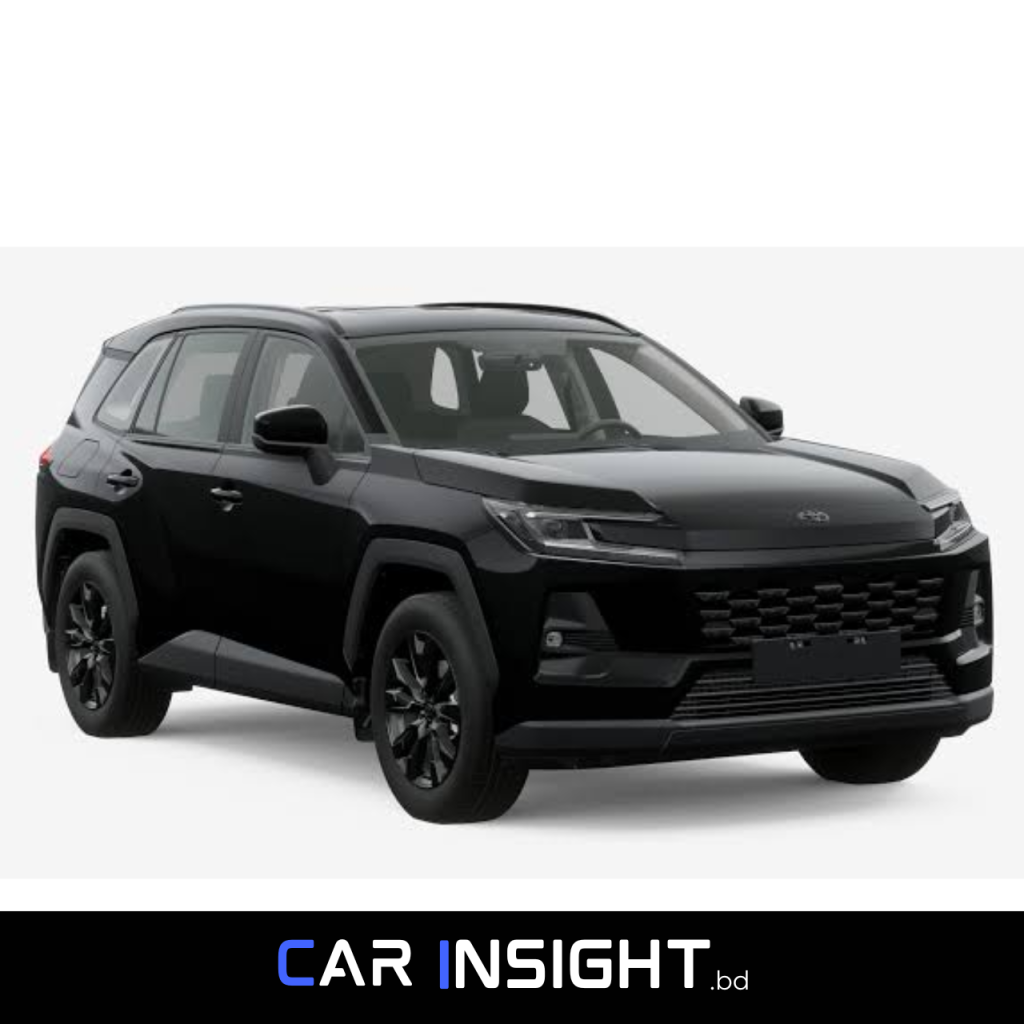
If you’ve priced out a Hyundai Tucson or a Mazda CX-5 in Dhaka and then typed “Volkswagen Tiguan price in Bangladesh” into Google out of curiosity, you already know the search results are a mess — random dollar-to-taka conversions, Indian on-road prices mislabelled as Bangladeshi ones, and listings that vanished months ago. That’s because Volkswagen has no official distributor, showroom, or assembly line in Bangladesh. Every Tiguan on the road here arrived through a private importer, which changes how you should shop for one. This guide breaks down what a Tiguan actually costs to land and register in Bangladesh, how it holds up on Dhaka’s roads, and where parts and servicing stand today.
Quick Overview — Is the Volkswagen Tiguan Worth Buying in Bangladesh?
A reconditioned or privately imported Volkswagen Tiguan (2018–2023 model years) typically lands and registers in Bangladesh for roughly ৳48–75 lakh, while a fresh, low-mileage 2024–2026 unit can cross ৳90 lakh once duty, VAT, and registration are added — well above what a locally assembled Hyundai Tucson or a Japan-sourced Mazda CX-5 costs for comparable capability. It’s best for a buyer who specifically wants German cabin quality, 4MOTION all-wheel-drive security, and DSG refinement, and who has already budgeted for the fact that no authorized VW workshop exists in the country. The biggest advantage is ride quality and build tightness that competitors in this price band rarely match. The biggest disadvantage is the total cost of ownership: parts have to be sourced from Thailand, the UK, or Germany, and only a handful of independent garages in Dhaka work confidently on modern VW electronics. If either of those two facts bothers you, a Tucson or CX-5 will serve you better for less stress.
Volkswagen Tiguan Price in Bangladesh 2026
Because Volkswagen doesn’t sell through an authorized Bangladeshi dealer, there is no single official price list — every figure below is a landed-cost estimate built from the vehicle’s CIF (Cost, Insurance, Freight) value plus Bangladesh’s published customs duty structure for imported SUVs/jeeps in the 1,984cc bracket. Treat these as planning ranges, not fixed showroom prices, and always get a written landed-cost quote from your importer before paying a deposit.
| Import Type |
Model Years |
Estimated Price in BD (BDT) |
| Reconditioned (Japan/UAE auction stock) |
2018–2020 |
৳48–58 lakh |
| Reconditioned/used direct import (UK/Europe) |
2021–2023 |
৳58–72 lakh |
| Fresh import, low mileage |
2024–2025 |
৳75–90 lakh |
| New/near-new, R-Line or SEL trim |
2025–2026 |
৳90 lakh – ৳1.05 crore |
Why the range is so wide: the Tiguan’s 1,984cc turbo-petrol engine sits in one of the more heavily taxed brackets under NBR’s engine-capacity-based duty schedule, and SUV/jeep-classified imports carry a higher total tax incidence than sedans of the same displacement — commonly well over 200% of assessable value once customs duty, supplementary duty, VAT, and advance income tax are stacked together. On top of that, BRTA registration fees and the annual Advance Income Tax alone add roughly ৳75,000 a year for a car in this cc range, before you’ve paid a single taka toward fuel or servicing.
Dhaka vs Chittagong: landed prices are broadly similar between the two ports, but Chittagong-cleared vehicles sometimes carry a slightly lower total because fewer intermediary agents are involved before the car reaches a Dhaka showroom. Ask your importer whether the car cleared through Chattogram Custom House directly or was trans-shipped through Dhaka, since that can shift the final price by ৳1–3 lakh.
Import duty impact in plain terms: a Tiguan that costs the equivalent of ৳25–28 lakh CIF in its country of origin can realistically double or more by the time it’s registered and sitting in your garage in Uttara or Bashundhara. This is not unique to Volkswagen — it’s the same duty structure that makes every non-locally-assembled SUV expensive here — but it matters more for the Tiguan because, unlike the Tucson, there’s no local-assembly discount available.
Full Specifications
Specs below reflect the current-generation (third-gen, 2024 onward) Tiguan as sold in Europe and North America, since this is the generation most commonly reaching Bangladesh as a fresh import. Older reconditioned units (pre-2023) use the previous-generation platform with broadly similar dimensions but a smaller boot and simpler infotainment.
| Spec |
Detail |
| Engine |
2.0L TSI turbocharged inline-4 (petrol) |
| Power |
201–268 hp depending on trim/tune |
| Torque |
Up to ~350 Nm (258 lb-ft) on higher-output variant |
| Transmission |
7-speed DSG automatic |
| Drivetrain |
FWD standard; 4MOTION AWD available |
| Fuel type |
Petrol (octane 95 recommended) |
| Claimed mileage |
9.5–10.5 km/l city, 13–14 km/l highway (manufacturer combined figures adjusted for BD conditions) |
| Length x Width x Height |
4,684 x 1,842 x 1,675 mm (approx.) |
| Ground clearance |
168–178 mm depending on drivetrain |
| Seating |
5 (current generation dropped the 7-seat Allspace option) |
| Boot space |
652 litres rear seats up, up to 1,650 litres folded |
| Safety |
6 airbags, ESC, ABS with EBD, lane-keep assist, adaptive cruise (trim-dependent), rear camera, hill-hold |
Note: earlier reconditioned Tiguans (2017–2020, including the 7-seat Allspace variant popular with families) will differ on seating capacity and boot volume — always check the actual auction sheet or registration book rather than assuming current-gen specs apply.
Detailed Review — How Does It Drive in Bangladesh?
The Tiguan’s biggest strength on Dhaka roads is low-speed composure. In Mirpur or Mohakhali traffic, where you’re crawling, braking, and creeping for most of the commute, the DSG gearbox’s low-speed hesitation — a known quirk on earlier Tiguans — shows up more than it would on a European commute where traffic flows continuously. It’s not a dealbreaker, but expect a slight delay when you tip into the throttle from a dead stop at a signal on Airport Road, especially in the older 2017–2020 units still running the 6-speed DSG.
On the open stretch of the Dhaka–Chittagong highway, the Tiguan is genuinely composed. The 2.0 TSI has enough mid-range torque to overtake trucks confidently without downshifting twice, and the suspension tuning — firmer than a Tucson, softer than a Golf — absorbs highway expansion joints well at 100–110 km/h. Wind and road noise stay low enough that conversation at speed doesn’t require raised voices, which is not something you can say about every SUV in this price bracket.
Where Bangladeshi roads test the car is pothole and speed-bump absorption in secondary roads — Uttara’s internal roads, parts of old Dhaka, and most upazila roads outside the highway network. The Tiguan’s suspension is tuned for European B-roads, not broken tarmac, so sharp-edged potholes transmit more into the cabin than they would in a Fortuner or a Pajero Sport with a body-on-frame setup. If your daily route includes unpaved or heavily patched roads, budget for more frequent bushing and suspension-component wear than a Toyota-based SUV would need.
Real-world fuel efficiency in Bangladesh’s stop-start city driving, combined with idling in traffic and running AC constantly, typically comes in around 7.5–8.5 km/l in Dhaka rather than the 9.5+ km/l manufacturer figure — a gap you’ll see on almost any turbo-petrol SUV once you account for local traffic density and near-constant AC load.
AC performance is a genuine strength. The dual-zone climate control keeps the cabin cool through Dhaka’s April–June heat and humidity without the compressor struggling, and rear vents on newer trims mean second-row passengers aren’t left sweating during a long jam near Gulistan. This is one area where the Tiguan noticeably outperforms cheaper crossovers in this price band.
Features Breakdown
Exterior: the current generation’s slimmer LED light bar and more upright grille give it a more planted stance than the outgoing model, and it reads as noticeably more premium parked next to a Tucson or CX-5 at a Gulshan valet stand.
Interior: open-pore walnut trim, double-stitched dashboard panels, and a materials quality that generally exceeds Korean and Japanese competitors at this price point — though owners report the touch-sensitive climate controls on 2021–2023 units are fiddlier to use one-handed in traffic than the older physical dials.
Infotainment: current-gen cars get a 15-inch central touchscreen with wireless Apple CarPlay/Android Auto; older reconditioned units (pre-2021) typically have an 8-inch unit without wireless phone mirroring, and BD importers sometimes retrofit aftermarket head units — check whether yours is factory or aftermarket before buying.
Safety: NCAP testing for the Tiguan generally scores well in its home markets (5-star Euro NCAP on most model years), though features like adaptive cruise control and lane-centering are frequently trim-restricted, and Bangladesh-bound reconditioned units often come from lower or mid-spec trims where these extras were optional and not fitted. Always confirm the exact feature list against the specific chassis/VIN rather than the general model brochure.
Region-specific gap: features like ventilated front seats, a 360-degree camera, and full ADAS suites are common on higher US/Euro trims but are frequently absent on the mid-spec units that dominate Bangladesh’s reconditioned pipeline. Don’t assume a feature exists just because it’s in the global press release — verify it’s on the actual unit you’re buying.
Fuel Economy — Real-World Numbers in Bangladesh
| Condition |
Realistic Mileage |
| Dhaka city (heavy traffic, AC on) |
7.5–8.5 km/l |
| Mixed city/highway |
9–10 km/l |
| Highway cruising (100 km/h) |
12–13.5 km/l |
Compared to a Tucson’s naturally aspirated or hybrid options, the Tiguan’s turbo-petrol setup is thirstier in stop-start traffic but closes the gap on the highway. A CX-5’s 2.5L naturally aspirated engine returns broadly similar city figures but slightly better highway consistency due to less turbo-lag-related throttle modulation.
CNG conversion: most workshops strongly discourage converting a turbocharged direct-injection engine like the Tiguan’s 2.0 TSI to CNG. The higher compression and turbo boost pressures increase knock risk on dual-fuel setups, and doing so will void whatever residual manufacturer or importer warranty remains. If monthly fuel cost is your primary concern, the Tiguan isn’t the right car — a naturally aspirated, CNG-friendly SUV will serve you better.
Maintenance Cost in Bangladesh
This is the section most competing articles skip, and it’s where a Tiguan buyer needs the clearest eyes open.
Estimated annual service cost: routine servicing (oil, filters, DSG fluid checks) at an independent European-car specialist in Dhaka typically runs ৳15,000–25,000 per visit, with 2–3 visits recommended per year depending on mileage. Budget ৳40,000–70,000 annually for routine maintenance alone, excluding wear parts.
Spare parts availability: this is the real cost driver. Common wear items — brake pads, filters, belts — are available locally or from Thailand-sourced VW parts networks within a week or two. Electronic components (DSG mechatronic units, sensors, infotainment modules) usually have to be imported specifically, which can mean a 3–6 week wait and a bill 30–60% higher than the equivalent part for a Toyota or Hyundai due to shipping and lack of local stock.
Common owner-reported issues in Bangladesh: the two recurring complaints among BD Tiguan owners are DSG jerkiness at low speed after 60,000–80,000 km if fluid changes are skipped, and electrical gremlins (window regulators, sensor faults) on humid-season starts, which several owners attribute to Bangladesh’s humidity accelerating connector corrosion faster than in Europe. Neither is catastrophic, but both mean a Tiguan owner should budget more contingency than a Tucson or CX-5 owner would.
Workshop access: there is no authorized Volkswagen service center in Bangladesh. A small number of independent garages in Dhaka (concentrated around Banani, Gulshan, and Mirpur DOHS) specialize in German cars and are generally trusted by the local VW owner community, but outside Dhaka, finding a technician comfortable with VAG-COM diagnostics is genuinely difficult. If you live outside Dhaka or Chattogram, factor in the logistics of getting the car serviced.
Who Should Buy the Volkswagen Tiguan?
Family buyers: if rear-seat comfort, AC performance, and highway stability for Dhaka–Cox’s Bazar or Dhaka–Sylhet trips matter more than absolute reliability-per-taka, the Tiguan works well — but confirm seating configuration (5-seat vs older 7-seat Allspace) matches your family size before importing.
Corporate/executive use: strong fit. The cabin presents well for client pickups and airport runs, and the badge carries prestige in a market where Toyota and Hyundai dominate volume.
First-time SUV buyers: not recommended as a first car in Bangladesh. The combination of import-dependent parts and a shallow independent-service network is a steep learning curve if you’ve never owned a European car here.
Upgrade buyers coming from a Tucson, CR-V, or CX-5: a sensible step up if you specifically want the driving dynamics and cabin refinement gain and have already priced in the higher running costs — otherwise you’re paying a premium for badge and interior feel without a proportional gain in reliability or ease of ownership.
Volkswagen Tiguan vs Competitors — Quick Comparison
|
Volkswagen Tiguan |
Hyundai Tucson |
Mazda CX-5 |
| Price in BD |
~৳48 lakh (recon.) to ৳1.05 crore (new) |
~৳25–35 lakh (used/recon.), ~৳56–61.5 lakh (new, locally assembled) |
~৳45–52 lakh (new import) |
| Engine |
2.0L turbo-petrol, 201–268 hp |
2.0L NA petrol, ~155 hp |
2.5L NA petrol, ~187 hp |
| Mileage (city, BD) |
7.5–8.5 km/l |
9–11 km/l |
8.5–9.5 km/l |
| Boot space |
652 L |
~540 L |
~438 L |
| Verdict |
Best cabin and highway feel; highest running cost |
Best value and easiest to service thanks to local assembly |
Strong middle ground on driving feel and parts access |
Frequently Asked Questions
Is the Volkswagen Tiguan good for Dhaka traffic?
It’s comfortable and composed at low speed, with strong AC performance for long jams, though the DSG gearbox on older units can feel slightly hesitant pulling away from a dead stop. It’s a fine daily driver for Dhaka, just not the smoothest low-speed gearbox in its class.
What is the maintenance cost of the Tiguan in Bangladesh?
Expect roughly ৳40,000–70,000 a year for routine servicing, with electronic or DSG-related repairs costing significantly more and taking weeks to source since there’s no authorized VW parts network in the country.
How much import duty applies to the Tiguan in Bangladesh?
As a 1,984cc SUV/jeep-classified import, it falls into one of the higher total-tax-incidence brackets under NBR’s engine-capacity duty schedule, commonly exceeding 200% of assessable value once customs duty, supplementary duty, VAT, and AIT are combined. Get an exact figure from your importer or the NBR duty calculator for the specific chassis and year.
Is the Volkswagen Tiguan reliable in Bangladesh’s climate?
Mechanically it holds up reasonably well, but several BD owners report humidity-related electrical faults (window regulators, sensors) appearing earlier than they would in a drier climate. Regular inspection during monsoon season is worth the effort.
Should I buy a reconditioned or a fresh-import Tiguan?
A reconditioned 2018–2020 unit is the more budget-sensible entry point and still delivers most of the driving experience; a fresh 2024–2026 import makes sense only if you specifically want the redesigned cabin, larger touchscreen, and higher-output engine tune, and are prepared to pay close to double.
Conclusion
The Volkswagen Tiguan is one of the most refined SUVs you can bring into Bangladesh, but refinement here comes with a real cost: higher import duty than a locally assembled Tucson, a thinner service network, and pricier, slower-to-source parts. Buy it for the driving feel and cabin quality, not to save money — and budget for ownership, not just the sticker price.
Check Out More Volkswagen Car Price: